
 | Prof. Ying (Gina) TangRowan University, USAYing (Gina) Tang is Professor of Electrical and Computer Engineering at Rowan University, Glassboro, New Jersey. Her research centers on the design, control, and optimization of discrete event systems (DES) with respect to their complexity, uncertainty and performance via mathematical modeling, statistical analysis, and computational visualization. Her current work involves two major thrust areas. One is Intelligent Game-based Learning Environments, where machine learning and adaptive reasoning techniques are fused with mixed reality technologies to offer personalized guided training. The other is Sustainable Production and Service Automation, where efficient models and algorithms are designed to help align manufacturers/service providers decisions with environmental considerations at every stage of the entire life cycle of products from conceptual design to end-of-life disposal. Tang work has been continuously supported by NSF, EPA, DOT, private foundations, and industry. Her work has resulted in two patents, and over 200 scientific publications. Tang is very active in professional services. She is VP Finance of the IEEE Systems, Man & Cybernetics Society (SMCS). She is the founding chair of Technical Committee on Intelligent Systems to Human-Aware Sustainability of SMCS and led the TC to win SMCS Most Active TC in 2021. She is also the founding chair of IEEE Robotic and Automation Society Technical Committee on Sustainable Production Automation and led the TC to win the RAS CERMA project and the RAS Most Active TC in 2020. TITLE: Engineering LLM Reasoning: From Efficient One-Call Intelligence to Multi-Agent Collaboration |
 | Prof. Annalu WallerUniversity of Salford, UK Annalu Waller PhD is Pro-Vice Chancellor and Dean of the School of Science, Engineering and Environment at University of Salford. She is Professor of Assistive and Accessible Technology, with a focus on Augmentative and Alternative Communication (AAC) technology. Her primary research areas are human centred computing, natural language processing, personal narrative and assistive technology. In particular, she champions the active involvement of disabled adults and children in all aspects of research and development of technology. Annalu was awarded an OBE in the Queen’s New Years Honours List in 2016 for services to people with Complex Communication Needs and is an Honorary Fellow of the Royal College of Speech and Language Therapists. TITLE: Inclusive AI: designing for diversity |
 | Researcher. Behrad AhmadpourUniversity of Oxford, UK Dr. Behrad Ahmadpour is a currently a DPhil researcher in Computer Science at the University of Oxford. He received his BSc in Electrical Engineering (Cryptography specialization) from Sharif University of Technology. His main research interests include randomized algorithms, adversary modelling, network security and protocol design. He has rich research experience across multiple countries and regions, focusing on distributed system security, quantum cryptography, DDoS mitigation and AI-based security analysis. Meanwhile, he works as a tutor at several colleges of the University of Oxford, delivering courses on computer science, mathematics, artificial intelligence and quantum information. He also holds professional cybersecurity certifications including CEH, OSCP and Security. TITLE: Enhancing Network Security Through Privacy-Preserving Protocols: Leveraging Modern Cryptography for Untrusted Real-World Applications |
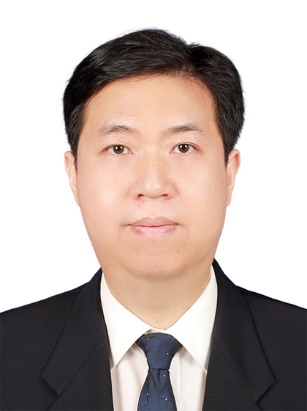 | Prof. Xiyuan HuBeijing University of Technology, China Prof. Xiyuan Hu received Ph.D degree in pattern recognition and intelligent systems from Institute of Automation, Chinese Academy of Sciences in 2011. He was a visiting scholar at Academia Sinica and Harvard University in 2012 and 2014, respectively. Since 2020, he became a full professor at the school of Computer Science and Engineering in Nanjing University of Science and Technology. And currently, he is with the faculty of information technology, Beijing University of Technology.His research focus on Artificial Intelligence and Computer Vision, Adaptive Signal Separation Theory and Application. He has published more than 100 journal and conference papers (such as Nature Communications, IJCV, IEEE T-SP, IEEE T-MM, CVPR, ECCV, ACM MM, etc.) in these areas. He is coauthor of two books (Chinese Science Press and Tsinghua University Press). He serves as a Council Member for Chinese Society for Imaging Science and Technology, an Associate Editor of Pattern Recognition, and an Editorial Board Member of Humanities & Social Science Communications. He won the Second Prize of Invention and Innovation Achievement Award from the China Invention Association in 2025, the First Prize of Science and Technology Award from the Ministry of Public Security in 2020, Youth Science and Technology Award of Chinese Society for Imaging Science and Technology (CSIST) and Scientific and Technology Progress Award of Chinese Computer Federation (CCF) both in 2019. TITLE: Deepfake Detection with Explainable Features and Multi-feature Fusion Technology |
 | Assoc. Prof. Yuanbo ShiLiaoning Petrochemical University, ChinaYuanboShi, an associate professor and PhD at Liaoning University of Petroleum and Chemical Technology, is a master's supervisor and the coordinator of the national first-class undergraduate program in Software Engineering. He was once funded by the China Scholarship Council for a visiting scholar program at Aalborg University in Denmark. His main research areas include distributed industrial wireless sensor control, industrial big data analysis, and artificial intelligence. He has published multiple academic papers in authoritative journals such as the International Journal of Control, Automation and Systems and Control and Decision, as well as at international conferences including ICISCE and CCDC. He has presided over provincial-level projects such as the Innovation and Development Project of the Liaoning Provincial Department of Education and the International Science and Technology Cooperation Project of the Provincial Department of Science and Technology, alongside numerous enterprise R&D projects, with results covering scenarios like intelligent industrial process control and big data system development. He currently also serves as a young editorial board member of the Journal of Liaoning University of Petroleum and Chemical Technology, a member of the Shenyang Branch of the Liaoning Computer Association, a first-level national software security development lecturer, and a reviewer for international academic conferences. TITLE: Quantitative Analysis of Raman Spectroscopy Based on Advanced Machine Learning Models |